Water mist vs sprinklers
Both put fires out. They do it very differently — and for most homes and buildings in the west of Scotland, high-pressure water mist protects people with a fraction of the water damage. Here’s how the two compare, and where each one genuinely wins.
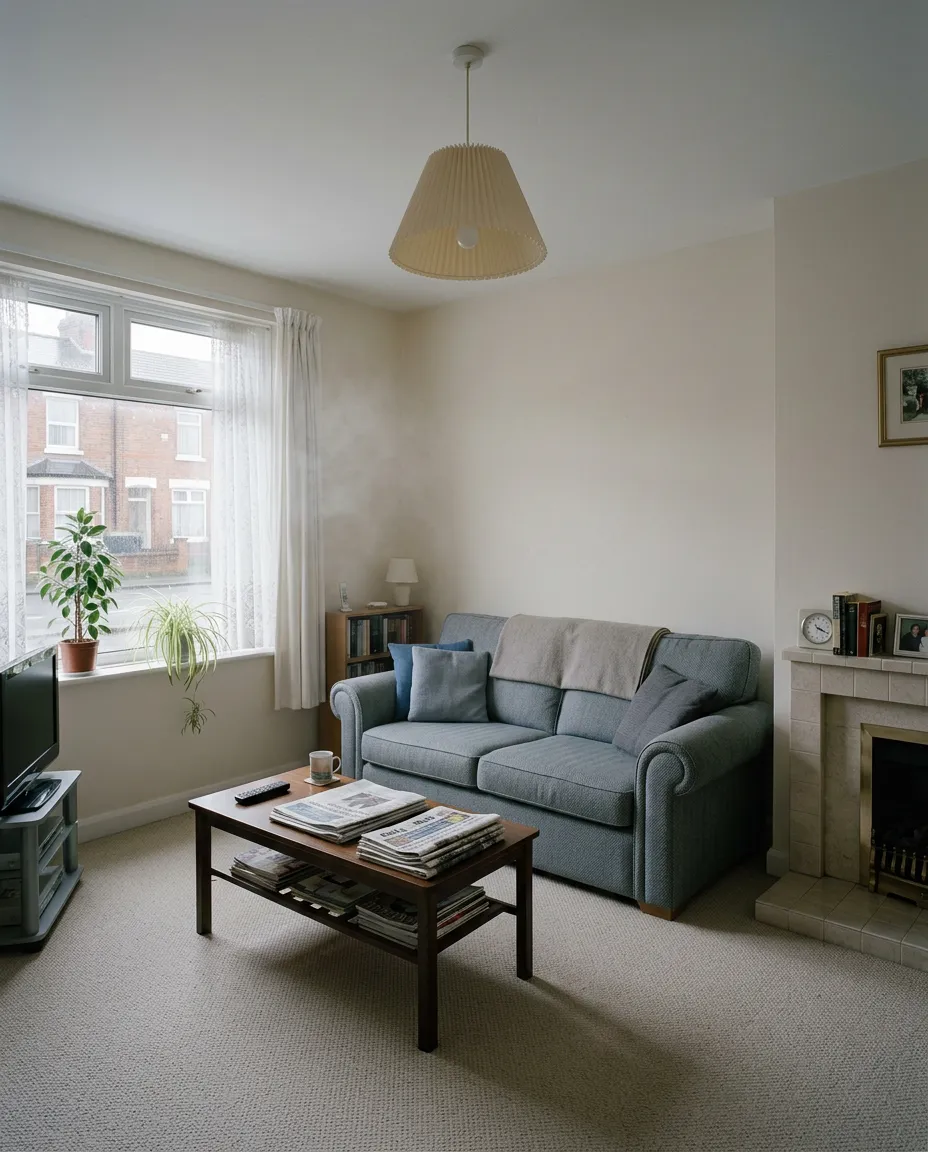
Illustrative image of a room after a water mist discharge.
The comparison
The differences that actually matter when you’re choosing a system for your property.
| Criteria | Water mist | Sprinklers |
|---|---|---|
| Water used | Up to 70% less | High volume |
| Water damage | Minimal | Often significant |
| Storage tank | None — mains fed | Usually required |
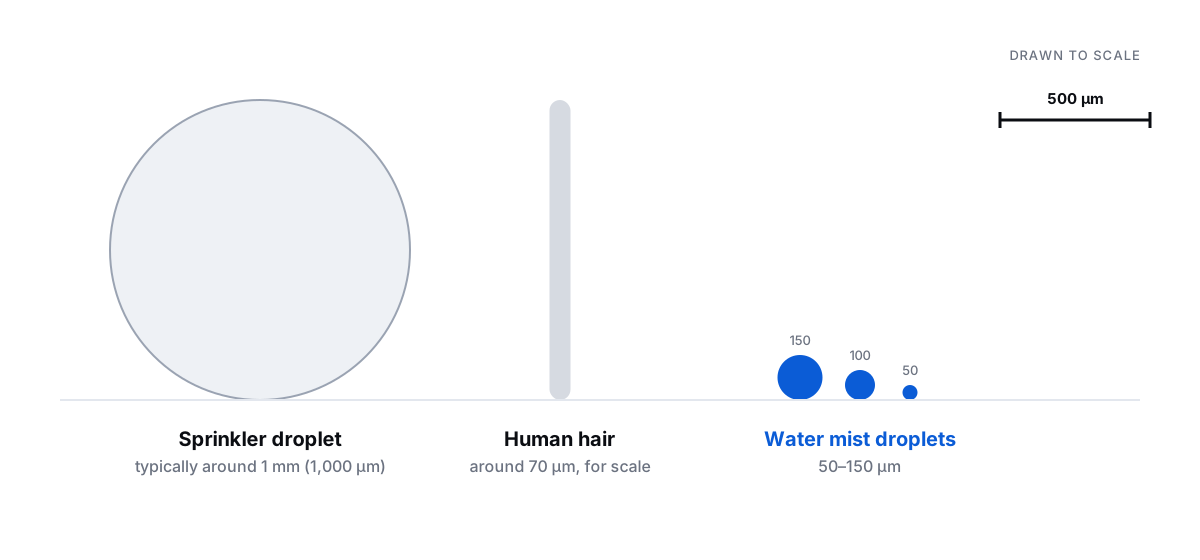
| Droplet size | 50–150 micron mist | Large droplets |
| How it works | Cools and displaces oxygen | Soaks and cools |
| Pipework | Slimmer, lower flow | Larger bore |
| Retrofit | Less disruptive | More invasive |
| Nozzles | Discreet | Bulky heads |
| Pressure | High (≈70–90 bar) | Low |
| Design standard | BS 8458 | BS 9251 / EN 12845 |
| Insurance view | Mixed — check with your insurer | Mixed — often easier to underwrite |
How they work
Pumps drive water through fine nozzles at high pressure, atomising it into a dense fog of 50–150 micron droplets. The mist flashes to steam on contact with heat — pulling energy out of the fire to cool it, while the expanding vapour pushes oxygen away from the flames. Far less water, used far more efficiently.
Heat bursts a glass bulb and the head floods the area with a high volume of water, soaking the fire and surrounding surfaces to cool and smother it. Proven and well understood — but it needs a lot of water, and that water has to come from somewhere and go somewhere.
Drawn to scale. The same water split into 50–150 µm droplets has 7–20 times the surface area of 1 mm sprinkler drops — which is why mist absorbs heat so quickly.
After activation
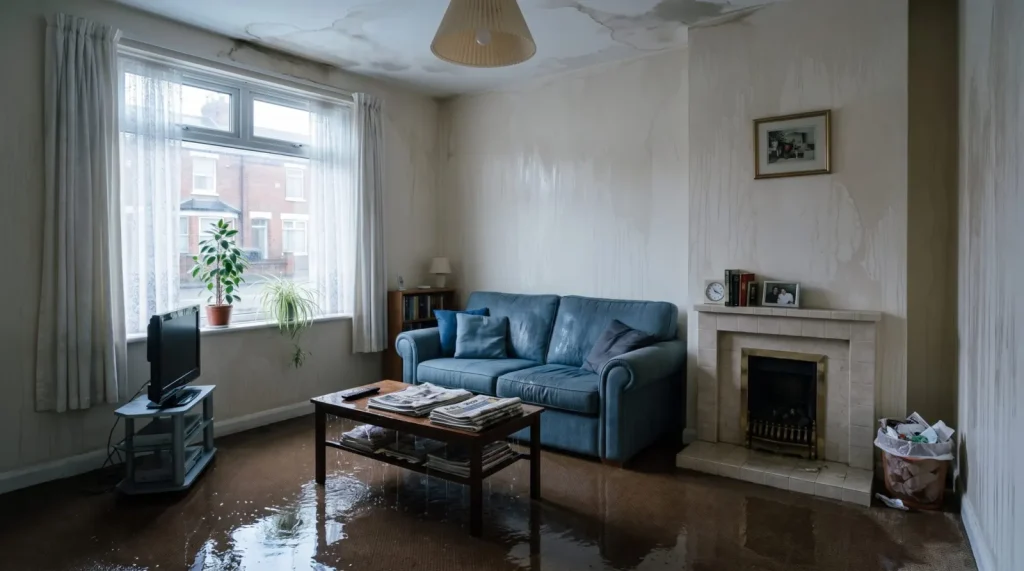
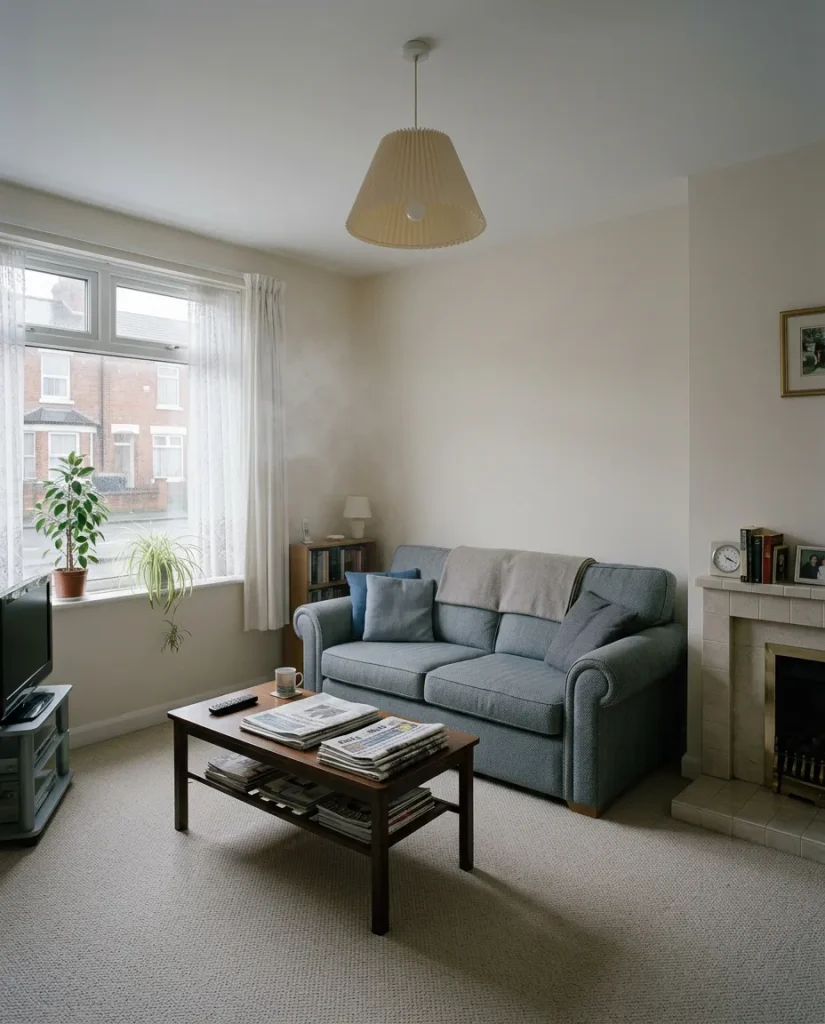
An illustrative comparison of the same room after each system has discharged.
After a sprinkler discharge
After a water mist discharge
Honest advice
We’re not here to tell you mist is always the answer. For large industrial units, warehouses, care homes and certain high-hazard settings, a traditional sprinkler system is often the right — and sometimes the required — choice.
Where water mist genuinely shines is homes, flats, HMOs, hotels, heritage buildings and fit-outs where water damage, disruption and tank space are real problems. If sprinklers suit you better, we’ll tell you.

FAQ
Sometimes, honestly. Large industrial sites, warehouses and care homes are where Scottish building standards name sprinklers as the primary route — we’ll say so rather than push mist where it isn’t the right fit.
It’s a genuinely mixed picture. Certified suppression systems generally can qualify for insurance discounts, and the Association of British Insurers has flagged sprinkler systems as a potential escape-of-water risk — which water mist’s lower flow rate speaks to directly. But Scottish Government guidance on traditional buildings notes that insurers often prefer sprinklers, because their design rules are easier to underwrite. Check with your own insurer.
Residential and domestic water mist systems, designed to the standard Scotland’s building standards cite.
Fitted and commissioned by qualified plumbers, backed by 19 years of frontline firefighting.
Design and consultancy for architects, builders and developers.
Tell us about your building and we’ll recommend the right system — mist or sprinkler — with a clear, fixed quote and no pressure.